
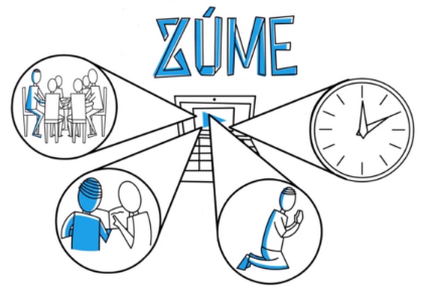
 Zume is a small group training module focused on helping small bands of Jesus followers learn how to obey the great commission and to multiply. And in that, it is not your average small group study. Zume is an online training that has ten lessons of roughly two hours each. Zúme means yeast in Greek. In Matthew 13:33, Jesus is quoted as saying, "The Kingdom of Heaven is like a woman who took yeast and mixed it into a large amount of flour until it was all leavened." This illustrates how ordinary people, using ordinary resources, can have an extraordinary impact for the Kingdom of God. Zúme aims to equip and empower ordinary believers to saturate the globe with multiplying disciples in our generation.
Gather a group of like minded friends and get started today!
0 Comments
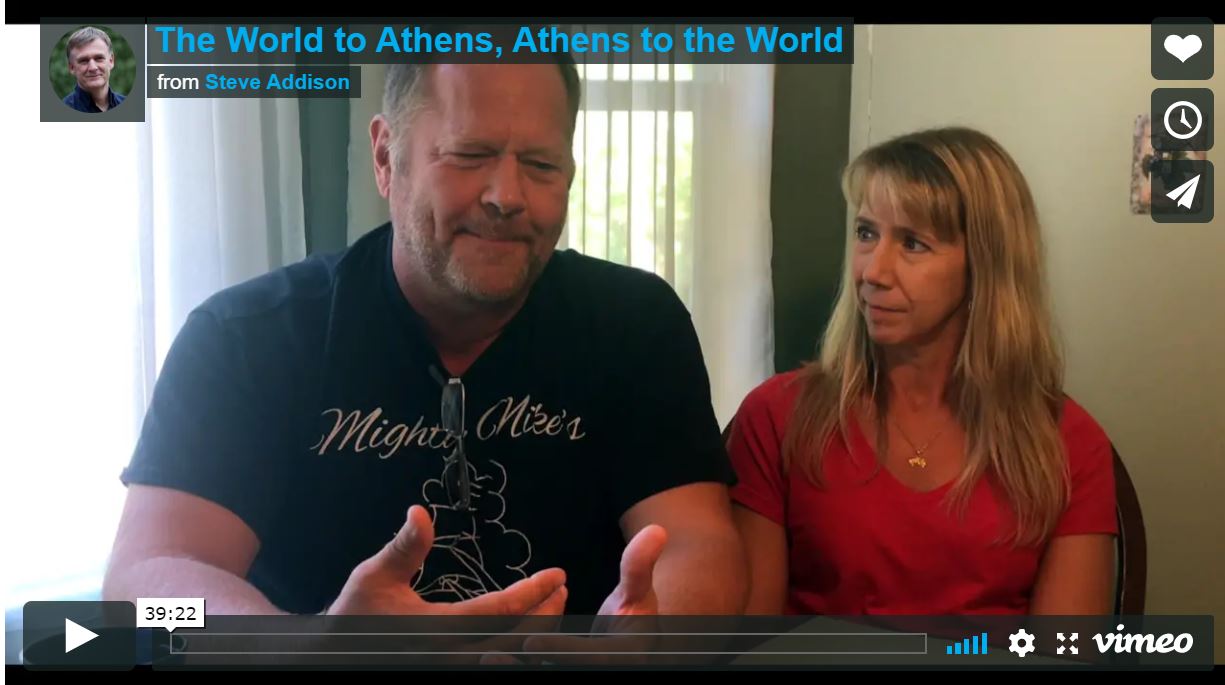 Over the last decade I've been regularly learning about discipleship and particularly, the principles of discipleship that lead to multiplication and the rapid expansion of the kingdom of God. One of the sources of that continued learning which has perhaps had more influence than any other is the Movements Podcast by Steve Addison. Steve regularly interviews practitioners from across the world who are applying these principles and seeing movements emerge. I'd encoueage you to skip over to Steve's website right now and find out how you can subscribe to the podcast. Visit Movements.net Now One of those practitioners who has been frequent guest and who is one of the leaders of the No Place Left movement across the world is Jeff Sundell. It is not without reason that Jeff, who hales from Bugger Hollow North Carolina and who spent much of his life making disciples in Asia, has been perhaps the most frequent guest on the Movements Podcast. And so when the most recent episode of the podcast featured a report from Jeff and his wife Angie's summer in Athens, I queued it up on my phone to listen to right away. I was not disappointed and there were so many nuggets of insight in their reporting that I went back and listened again, taking notes of the things that seemed extra important. And so with this post I'd like to share those insights and encourage you to find some time in the next week to listen to the interview for yourself (or you can watch now below). Here are a five of the nuggets that I gleaned from their conversation. If there are any "nuggets" that you hear that I didn't mention, feel free to share them in the comments below. 1. The Gospel is worth it. Angie started the inteview talking about the many times they heard heartbreaking stories from refugees who had lost everything. People whose homes were destroyed, who had lost jobs, who had lost everything and over and over again they would say, "It was worth it! It was worth it because when I came here I got to hear about Jesus." The Gospel is worth it! 2. Train everyone to be a disciple maker. One of the adjustments that the disciple makers had to make as they worked with refugee populations had to do with the transient nature of the people. A new believer from a Muslim background might be in Athens for a year or they might just be there for a month or even days. The workers on the ground began to cast vision early and often for the great commission and to train everyone to identify lostness, to share their faith and to make disciples. Everyone they worked with was seen as a potential missionary carrying the gospel to the next location whether that was further into Europe or back to their own country. Train everyone! 3. Little happens if disciples of Jesus are not broken for lostness. Again and again, they saw that the hearts of those who had found faith in Christ and who were sharing that faith boldly, were broken for the lost. Their families didn't know Jesus. Their people didn't know Jesus. That was a heavy burden on their hearts which compelled them to go and to pray and to share. All the methods and tools in the world will do little good if the people of God are not broken by the lostness around them. 4. Focus on the grandchildren. This was one of the most interesting and powerful lessons from the interview. As the summer progressed, one of the changes they made in coaching and relating to the leaders in Athens, was to stop asking about how they were doing at sharing the gospel, discipling new believers and leading new churches and to begin talking with them only about how their grandchildren were doing at those things. In other words, they began consistently asking about their disciples' disciples. This shift lead to more concientious focus on training disciples to train disciples and resulted in better discipleship. 5. A Hub stategy allows for local, national and global mission to exist. I had first heard the idea of a hub strategy from Steve Smith in a 2016 article in Mission Frontiers Magazine. That article caught my attention and over the last few years I have continued to think about what home hubs would actually look like. It was Troy Cooper's Great Commission Pipeline video about a hub strategy which was published in April of 2018 that really fleshed out the idea for me though. Jeff and Angie got to see the fruit of that kind of strategy in Athens and it is exciting to see it develop and grow. Those are five things that I gleaned from the interview. What about you? Watch the interview below!  I have heard the sentiment from a number of different people over the last few years - usually from moms.
Aren't there any missions experiences or training events that we can do as a family? Too often, in order to get trained or to go out on a mission trip, we have to find someone to watch the kids and yet we want desperately to model for our kids what it means to live on mission. Not easy to do when we are forced to leave the kids at home. Everywhere to Everywhere has always been an event that is open to families coming and we've worked to create an experiential weekend of learning and training that older kids can enter into along with mom and dad. Our regular E2E training weekends are good for high schoolers and mature junior high students who come with a parent. The learning is often discovery based and interactive and much of the weekend is experienced outside of the training room at the local mosque, ethnic restaurants and in neighborhoods. But it still hasn't been conducive to a family with elementary aged children. And so in May we will have our very first E2E Family Weekend. The idea is to create a weekend of learning and ministry that the whole family can come to together. It will be for school aged kids and above. We still aren't ready for babies and toddlers but are working to create a great weekend that the whole family can enter into together. We will continue to working on the details and adjustments that need to be made and even today I came across another challenge that we need to consider: early bedtimes! Our family is working together to create a weekend that your family can enter into together. But we'd love your feedback as well. Stop by and read through the program description page and then share your ideas in the comments for adaptations and adjustments that would help create a family friendly E2E weekend. The dates for the first E2E Family will be May 31 - June 2 in Sioux Falls, South Dakota. 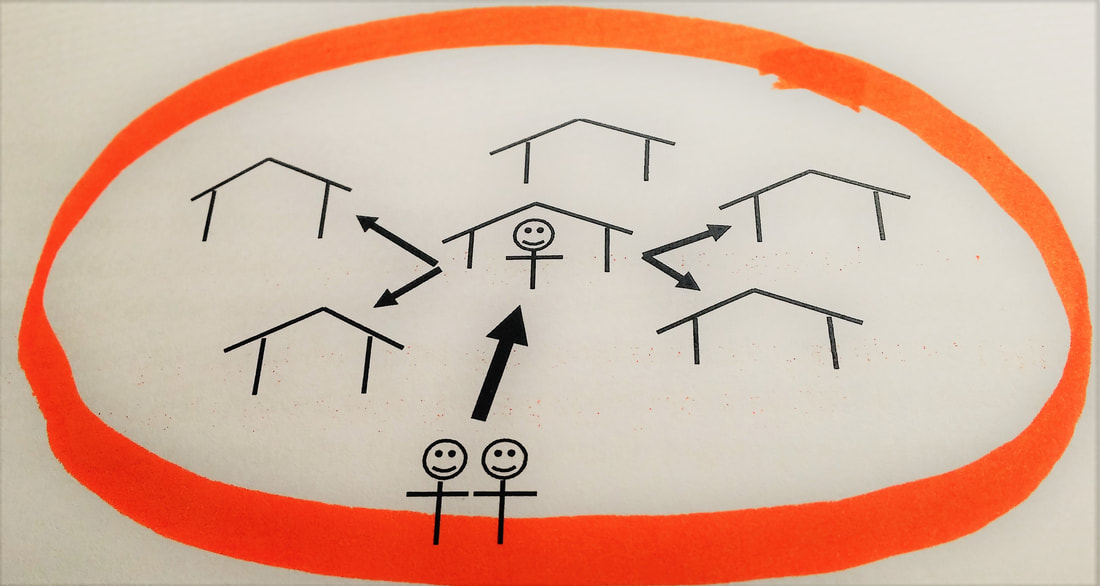 Every fourth Saturday of the month, a group of Jesus’ disciples gather in Sioux Falls South Dakota for what we call Sent Saturdays. We spend some time training through Luke 10, do a little role play, pray together and then head out into the city to knock on doors, offering to pray for people. After about an hour in the harvest, we return for a time of debrief. We are not wanting to do door to door evangelism with Sent Saturdays. We are looking for persons of peace. At the heart of Jesus’ ministry was the conviction that, since the Father is Lord of the harvest, he will provide the workers. God alone initiates the mission. So in each location the disciples’ assignment was to find the people that God had prepared. In this way Jesus laid the foundation for a missionary movement that would reach the world.” A person of peace is a God prepared person. Troy Cooper, in the video below, defines a person of peace as someone who:
The woman at the well (John 4), the demoniac (Mark 5), Zacchaeus (Luke 19), Cornelius (Acts 10), Lydia at the river’s bank and the Philippian jailer (Acts 16 ), Jason in Thessalonica (Acts 17) and Crispus the synagogue leader (Acts 18) are all examples of people in the Bible - persons of peace - who received the messenger, the message and the mission. God had prepared them to encounter the gospel witness and when they did, they became the conduits of the good news in their families and communities. They, not the apostles who shared with them, become the main vehicle for the spread of the gospel in their regions. The person of peace is not the only strategy that God uses to expand his kingdom in families, cities, nations and people groups but it was one strategy that we see Jesus training his disciples to use. Jesus Sends Out the Seventy-Two After this the Lord appointed seventy-two others and sent them two by two ahead of him to every town and place where he was about to go. He told them, “The harvest is plentiful, but the workers are few. Ask the Lord of the harvest, therefore, to send out workers into his harvest field. Go! I am sending you out like lambs among wolves. Do not take a purse or bag or sandals; and do not greet anyone on the road. Jesus sent the “seventy two others” out on mission. These aren’t even his closest disciples but “others” who’ve been hanging around, learning, growing, observing. And Jesus sends them out on mission. They are to go into the villages of the region, sent as sheep among wolves. They’re not to take anything with them but rather to depend on the hospitality of strangers. They are to find the peaceful person who will accept them and feed them and listen to them. They are to heal the sick and proclaim the kingdom. If they don’t find the peaceful person, they are instructed to brush the dust off their feet and leave. Who does ministry this way? . . . Jesus does. Think of it this way. You may be the person of peace in your neighborhood, the person through whom God will work to introduce your friends and neighbors to the life of faith in Christ. You know these people. You have regular chances for interaction. You understand their culture, language and history. But you probably won’t be the one to reach the apartment complex on the other side of town. The harvesters are in the harvest. The person of peace living in that apartment complex, who knows the culture, language and history of those living there is better positioned to naturally share the good news of Jesus with everyone in the apartment complex. Jesus commands his disciples to pray for harvesters as they are going into the harvest. Why? Because the harvesters are in the harvest. And so when we go into neighborhoods and apartment complexes and new communities, we are not looking to evangelize the whole area. We are looking for the person of peace and, when we find them, we don’t leave. We invest there. We cast vision. We train them to be disciples of Jesus so that they can disciple their friends and neighbors. This is the basic idea behind the idea of the person or house of peace. Again, it’s not the only way that God works to expand his kingdom but it is an important principle that we see again and again in scripture. I want to encourage you to explore this principle more. First, study Matthew 10:5-14 and Luke 10:1-11. Read the book of Acts as well. Look for how and where the person of peace principle shows up. Take notes and ask what it would look like to apply the principle in your context. Next, take some time to look through the resources in the links below. I’ve added approximate times to read or watch each. In it all, be like the Bereans (Acts 17:10-12) and examine the scriptures to see if what we’re talking about here is true. Learn it - Apply it - Share it - Today. RESOURCES FOR FURTHER LEARNING The Person of Peace by Jerry Trousdale and Glenn Sunshine (article -5 minutes) Kingdom Kernels by Steve Smith and Nathan Shank (article - 15 minutes) Testimony of a person of peace at Movements (article - 3 minutes) Searching for a House of Peace in the U.K. at Movements Podcast (podcast - 30 minutes) House of Peace by Jeff Sundell (youtube training - 12 minutes) Four Fields of Kingdom Growth by Nathan and Kari Shank (training manual - 2-3 weeks) Image Credit 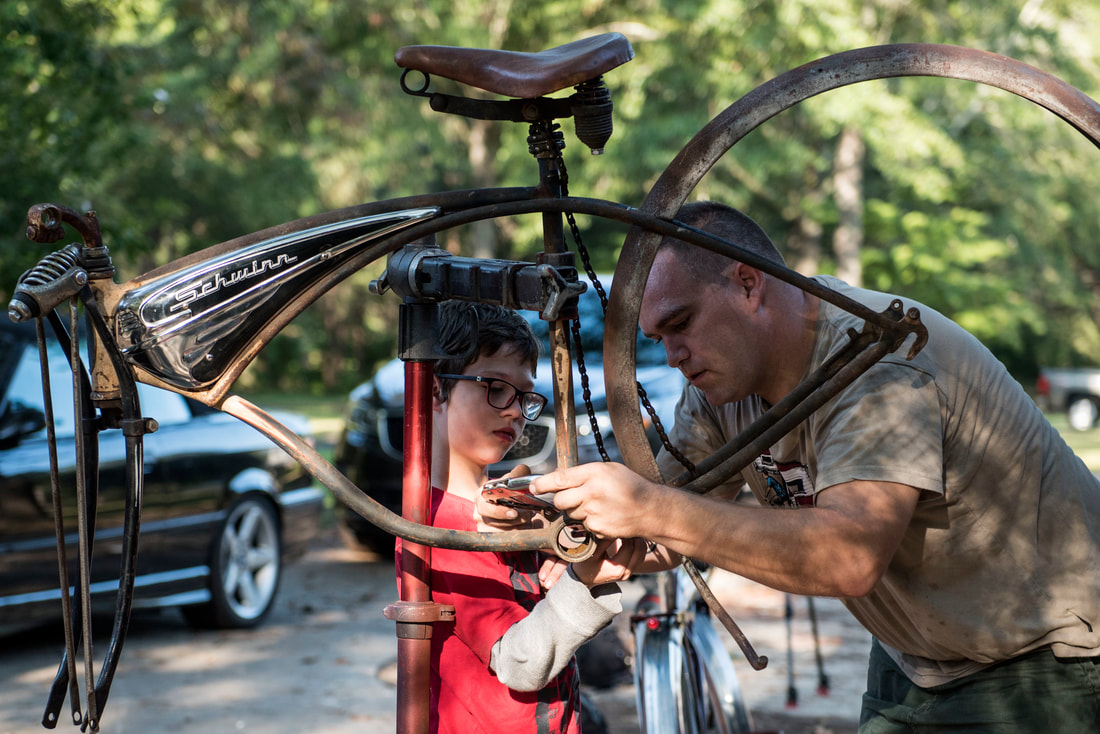 Here is a question for you: Are you training or teaching your disciples? You may be wondering, is there a difference? There is a difference and despite the differences, they are both used powerfully by God to raise up disciples. Both are valuable and important, but we too often try to teach things that we should be training. Teaching is the passing on and receiving of information to gain knowledge. Training is the passing on and mastering of skills. Again, both are important. But consider the picture above. A man is helping a younger person become a bicycle mechanic. There are many ways to become a bicycle mechanic. My wife once bought be a book called "Bicycle Maintenance" and it gave instructions on how to fix all sorts of problems that happen with a bicycle. There were even lots of pictures. Reading a book is one way to learn about fixing my bicycle. But I never really became a bicycle mechanic - I had a lot of knowledge, but I didn't master the skills. That is because fixing a bicycle is more about learning skills than it is about gaining a bunch of knowledge. To become a competent bicycle mechanic, what I need to do is spend time with a bicycle mechanic - like the boy in the picture above. I need to change hundreds of bicycle inner tubes. I need to adjust hundreds of bicycle break problems. I need to take a apart and put back together hundreds of bicycles. Because the only way to get competent at fixing bikes is to fix lots of bikes. Some aspects of being a bicycle mechanic are really just about knowledge.
But most of the work of a bicycle mechanic is a skill. And there is really only one way to get competent at a skill. Practice. Practice. Practice. Practice. And it is that way in almost every area of life. Anything that you do well, you do it well because you have done it a lot. You have mastered a skill. So now let's step back and look at how we make disciples. Much of what we know to do in order to obey Jesus are actually skills that we have learned. We don't just know about prayer, we have become better at prayer as we have prayed and prayed and prayed and prayed. We don't just know about reading our Bibles. We are a lot better at reading God's word and interacting with it and learning from it now than when we first began. And with both, there was probably someone who modeled for you what prayer is and how to read your Bible and walked with you until you figured it out. What are the things that disciples of Jesus do? I would encourage you to make a list of five to ten things that you wish every member of your church was doing regularly as a disciple of Jesus and then ask yourself, "Have I trained them to do that?" I'll give you one example that I am working to train as many disciples as I can in. We all know that as disciples of Jesus we are commanded to tell others about the gospel. One way to do that is to share our personal testimony. Paul did this frequently in the book of Acts. In the video below you will see what we use at Everywhere to Everywhere events to train people how to share their testimony. We write out our testimonies and then we practice and practice and practice and practice until we have it memorized. We won't be confident to share what we are not competent to share. Learn it. Apply it. Share it. Today. photo credit 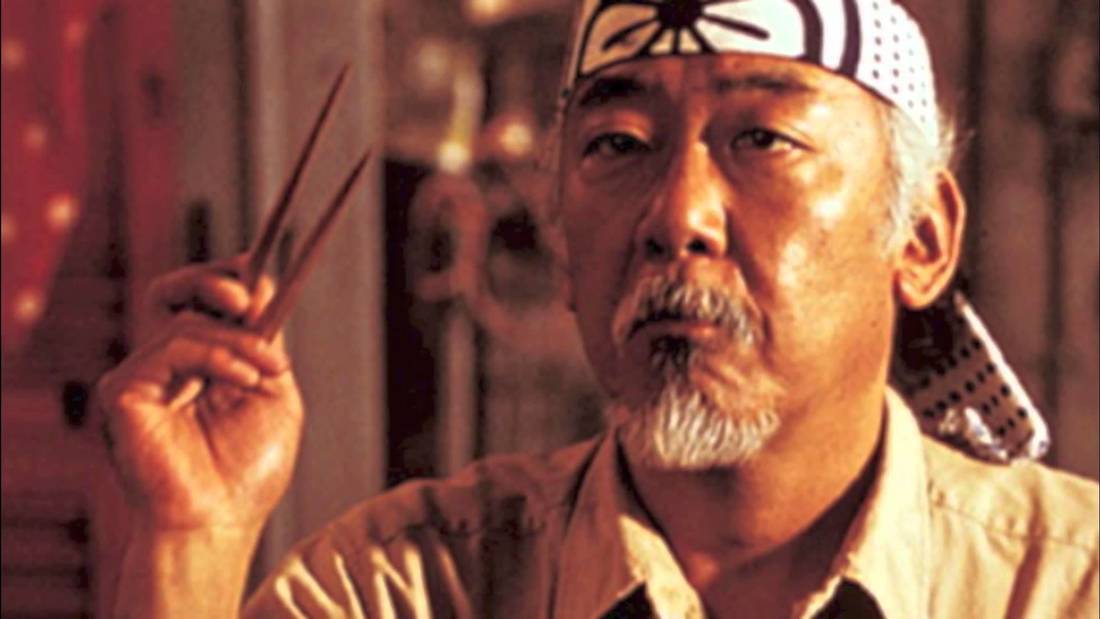 Last week I was listning to the Lifeschool Podcast hosted by Ceasar Kalinowski and Heath Hollensbe. For episode #178 they were talking with Rick Bartlett who gives leadership to Tabor College's Ministry Entrepreneurship and Innovation masters degree program. The topic was mentoring. Through the course of the conversation, I became inreasingly convinced that our decision create E2E as a multi-generational training event - not exclusivly a youth group event - was the right decision. As it is, we want youth groups to come to our E2E trainings but we ask that they come with adults from their church, ideally mentors who they know. We actually tell youth groups that they have to have at least one adult for every two youth that come. I think we can help teens engage with their faith by walking with them, by doing it with them, by coming alongside them. And then doing mission with them. And I think those kinds of things are what help students grow." Our thinking with that idea comes from our own experience. Too many youth in our churches think that the only adult they can relate to or learn from at their church, and perhaps, in their life, is their youth pastor.
Something special happens when a young adult sits down and digs into the word of God with adults from their church, when they watch adults wrestle with their faith and fight to overcome their fears. What our youth need more than anything are models of radical obedience and surrender to Jesus. Everywhere to Everywhere training events allow for that sort of modeling to happen on mission together. So if you are a youth pastor - YES! We want you to bring your youth group to the next E2E event but we want you to bring adults along with them; adults willing to be challenged and stretched and pushed out of their comfort zone in full viewing of these kids. Adults willing to take what they learn back to your church and lead these young people out into the harvest as they lead them into an abiding relationship with Jesus. Bring the kids . . . but bring Mr. Miyagi along with them. Click the program tab above to learn more about what is invovled in an E2E weekend.  We are excited to announce that we will be hosting another Everywhere to Everywhere (E2E) training event in Sioux Falls, SD the weekend of October 12 -14.
If any of those statements sound like you, join us for this three day training event.
We want to invite you to tap a few shoulders in your church and help them come to E2E. Here is all the relevent information When Friday October 12 at 6:00 pm - Sunday October 14 at 8:00 pm Where Life Church 501 N Elmwood Ave - Sioux Falls, SD Cost $125
 Last week we shared seven podcasts that we have found helpful to fuel the missions fire. Today we’d like to add to that list of resources and share with you seven video channels that will help you train unto the harvest and cast vision for the great commission. Some are focused purely on training and equipping the local church. Others are focused on helping the local church catch God’s vision for the nations. All have been inspiring and helpful and we hope they will do the same for you. Everywhere to Everywhere (E2E) works to multiply healthy disciples and raise up missional leaders. We are challenged to inspire believers to cultivate a heart for the least reached locally, nationally and globally and to provide tools that will help them make a difference. We hope that these seven video channels will support that effort. At the bottom of the post, we’ve shared one video from each of these sites to give you a bit of the flavor of their content and we hope you will explore more. [READ ALL OF THE 7 SERIES BLOG POSTS] MB Mission https://vimeo.com/mbmission MB Mission believes in the power of story. Their videos will take you into the heart of mission all across the world, telling the stories of God’s engagement with and through his people. Powerful testimonies will encourage and inspire you. Global Frontier Missions https://www.youtube.com/user/gfmvideos Their GFM 101 series of videos have been especially helpful for casting vision with local churches and individuals. These short videos do a great job of unpacking the great commission and some key concepts that missionaries are wrestling with today. Frontiers USA https://vimeo.com/frontiersusa Frontiers is one of the largest mission agencies focusing specifically on the Muslim world. These inspiring videos tell the story of God's working through his people across the Muslim world. No Place Left Training https://www.youtube.com/npltraining The No Place Left Network are a group of like minded individuals and churches who are working to see movements of disciples making disciples spread across the globe until there is no place left (Romans 15:23). In order to work toward that goal, they have been developing simple and accessible training tools. These they freely give to anyone who is interested in being a disciple who makes disciples and we have incorporated these tools into our Everywhere to Everywhere training events. The 411 Training module is a key component of E2E. Curtis Sergeant Training for Multiplication https://www.youtube.com/curtissergeant Curtis is one of the foremost trainers in movement methodology and has been a catalytic part of movements across the globe. His 28 multiplication concepts videos are a great first step into thinking about multiplication. They are accessible and easily understandable and at less than 10 minutes, each can be watched over a lunch break or after work. Engage Africa https://www.youtube.com/engageafrica Engage Africa has put together a series of five videos unpacking their work to see multiplying movements happen across Africa. Hosted by African pastors and practitioners, these videos allow us to learn from local leaders on the ground in Africa. Filled with powerful teaching and amazing testimony, these videos are a great tool for learning about missions and movement. Pioneers USA https://vimeo.com/pioneersusa Pioneers is another large mission agency whose focus is on unreached people groups across the globe. Their videos do a good job of telling the story of what God is doing among the nations. They also have a series of videos to help train and equip sending churches - great for pastors and mission committees. If you know of other video channels like these, feel free to share them in the comments below. MB MISSION GLOBAL FRONTIER MISSIONS FRONTIERS USA NO PLACE LEFT TRAINING CURTIS SERGEANT TRAINING ENGAGE AFRICA PIONEERS USA
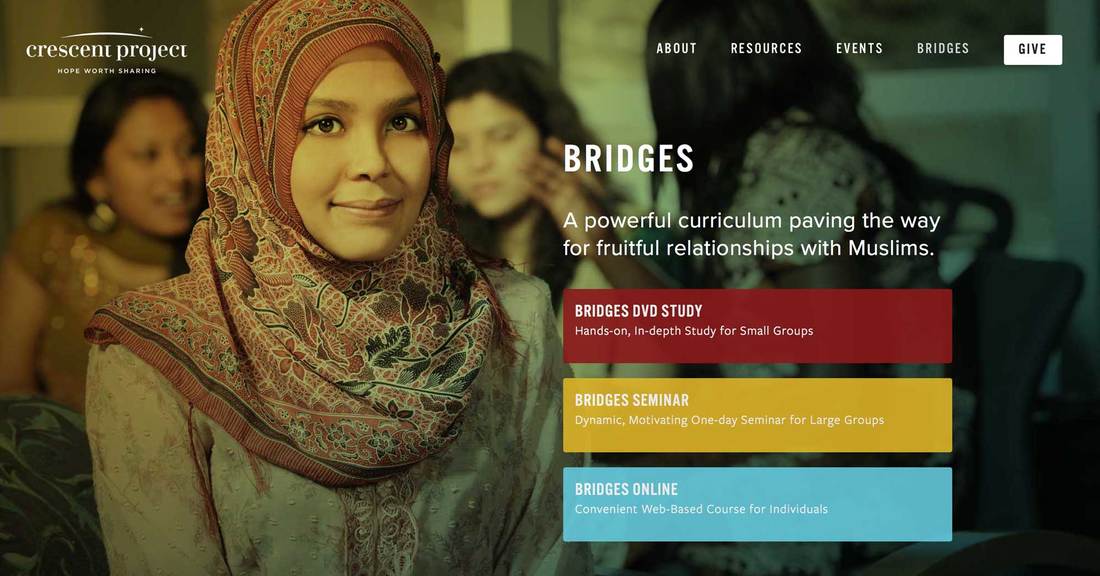 When my family and I returned from Turkey in 2012, one of the biggest challenges we faced was the level of fear and misunderstanding that we saw in well meaning Christians toward Muslims. We had spent nearly five years building relationships with Muslims who had become our dear friends and it broke our hearts to think that fear, misunderstanding and misinformation were paralyzing the church and preventing them from even saying hello to Muslims here in the U.S. let alone telling them good news about Jesus Christ. In all honesty, my first response was one of bitterness toward the church but God in his grace soon moved me to compassion and understanding. Our friends didn’t share our experience of loving relationships with wonderful Muslim neighbors and friends. It was at about that same time that a friend told me about the Bridges Study. The Bridges Study is a six lesson DVD study that can be used with small groups or Sunday school classes. As I’ve helped groups go through the study, I’ve seen it break down fear and remove misunderstanding as participants grow closer to Jesus as they step out in faith. Crescent Project founder, Fouad Masri, hosts the study which includes great teaching, inspiring testimonies and actionable next steps. I think every church should take their members through the Bridges Study. Here are five reasons why.
The Bridges Study will help you learn about Islam and Muslims through a Biblical/Missional Lens. Everyone is learning something about Islam and about Muslims. The source of that learning is generally the media or media personalities and the motivations behind those talking is often quite different. Some just want everyone to get along. Others want to warn us of hidden plots to take over America. The Bridges Study however presents great information in six thirty minute lessons through a Biblical lens that believes that God wants to see all Muslims repent and believe and follow Jesus. Participants often report that the Bridges Study lowered their fear, increased their understanding and gave them a heart to begin to pray regularly for Muslims to come to faith and look for opportunities to build relationships. The Bridges Study will strengthen the faith of those who go through it. Whenever we step outside of our comfort zones, we have an opportunity to be stretched and see our faith grow. One of the surprising benefits of working to mobilize the church to share the love of Jesus with Muslims was that as people began to explore learning about Islam and about how to share their faith with Muslims, their own faith began to grow. I’ve seen many who have taken the Bridges Study and met a Muslim suddenly reading their Bibles far more regularly because their new Muslim friends ask them questions they’ve never been asked before. Their prayer lives increase. As God begins to use them, their faith grows. The Bridges Study will help those who participate to be Christ’s ambassadors. 2 Corinthians 5:20 says that we are therefore Christ’s ambassadors, as though God were making his appeal through us. One of the cornerstone lessons of the Bridges Study is the four attitudes of an ambassador. It is a lesson that is crucial to understand if we are to share Jesus love with Muslims and as so many participants point out, with anyone. The Bridges Study will invite participants to step out in risk taking obedience to Jesus together with others. After each lesson, there is an action step to take. These are designed to get you out of the living room and into a relationship with a new friend. The goal is to give your new Muslim friend an opportunity to respond to the gospel and be connected with a true follower of Christ. It also gives you and your group an opportunity to step out in risk taking obedience to Jesus together. It gives you the chance to run after the things of God together! There is very little that is more exhilarating than step out in faith with a group of friends for the glory of God! Passive faith becomes active. Shallow fellowship become deep. And God will use your group to share the gospel with Muslims in your community. You’ll be running together! The Bridges Study will help you to be a part of seeing Muslims come to faith in Christ and worship Him. Many of the people I work with struggle to believe that God could use them to introduce a Muslim to a life transforming relationship with Jesus. But as participants begin to step out in faith, God begins to use them, to give them opportunities to share and to love well. Jesus tells us that the harvest is plentiful but the workers are few and then he commands us to pray to the Lord of the harvest to send out more workers into his harvest fields. The fields are his and he wants to use you to see Muslims come to faith in Christ. He has used people just like you all across the world. The Bridges Study was created first and foremost to help mobilize more harvesters into the harvest among Muslims. Start a Bridges Study today and join God in his miraculous movement in the Muslim world. CLICK HERE TO LEARN MORE ABOUT THE BRIDGES STUDY Click here to watch Session 4 to get of feel for the study After participating in an Everywhere to Everywhere (E2E) training weekend, many ask the question, "What next?" The Bridges Study can be a great next step as you return to your home church. Invite others to join you in exploring how God might want to use you - and your church - to reach the Muslim world. CLICK HERE TO LEARN MORE ABOUT E2E 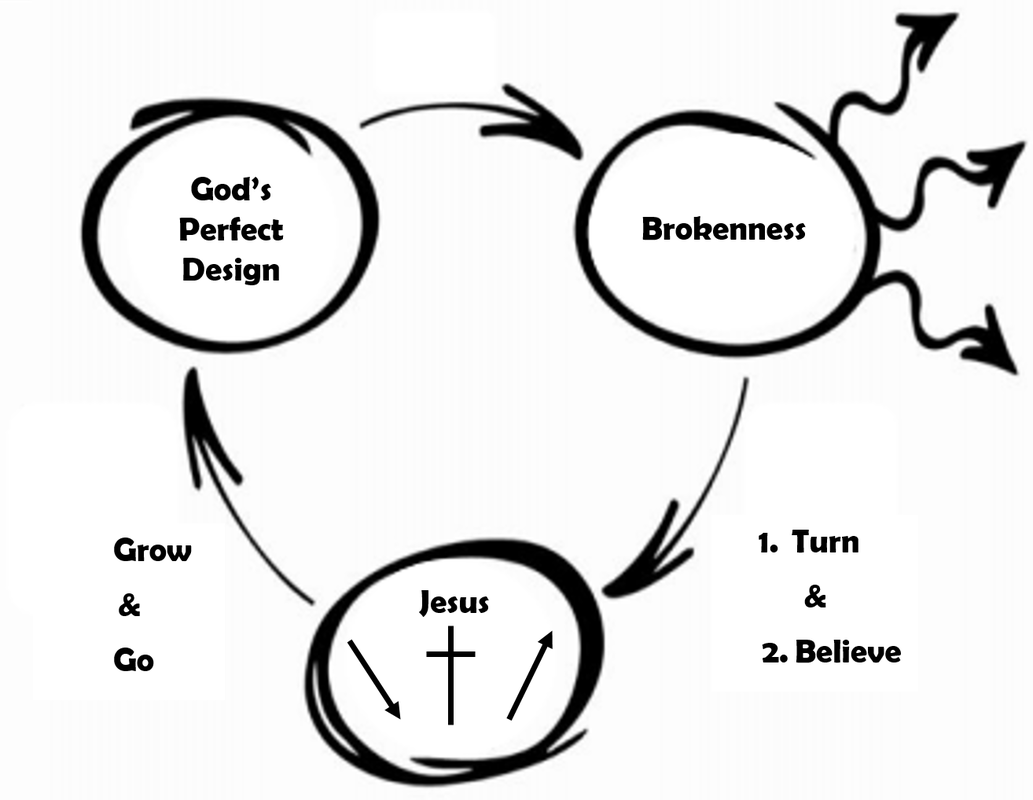 When you read the gospels and the book of Acts, one thing stands out - everyone is talking about Jesus. Boldly. In fact the idea of bold proclimation of the gospel comes up in nearly every chapter of the book of Acts. Regardless of risk or response, it is what those following Jesus did. They seemed to believe that if the sowed the gospel broadly, they would reap an abundant harvest. They seemed to believe that when Jesus said the harvest was plentiful, he was telling the truth. They believed and trusted in the gospel. Sometimes when my pastor shares a story about sharing the gospel with someone he's met on a plane or at a gas station, others will say, "He's so gifted at sharing the gospel." While my pastor is a truly gifted man in a lot of different aspects of life and ministery, I usually take a moment to disagree with that statement. You see it's not so much that he is gifted at sharing the gospel, it's that he is sharing the gospel. He sows abundently and guess what, he reaps more abundantly than most. It is as Jesus and the scriptures say it is. Wayne Gretsky once quipped that he missed 100% of the shots that he never took. And so as followers of Jesus, we need to find ways to share the gospel. We are to be His witnesses (Acts 1:8) and to be His ambassadors (2 Corinthians 5:20) and both of those require us to say something. The outcome is in the hands of the Holy Spirit and not for us to worry about. We just need to share. One tool that I have been taught that I have found to be very helpful is the Three Circles tool for sharing the gospel. I like it for a number of reasons but mostly because it is simple enough for my 12 year old to be able to use. Some might push back saying that it is too simple - fair enough. If you want to add Bible verses or other things, you can certainly do that. But the reality of someone coming to faith is not dependant on a perfect gospel presentation - it's dependant of the Holy Spirit's work in the heart of the one who is lost. Four Spiritual Laws, Roman's Road, The Way of the Master, the Cross Diagram - they all work. Not because they are somehow the perfect presentation of the gospel but because people of faith use them. When we step out in faith to enter into gospel conversations, God shows up. Below are a number of examples of the Three Circles Gospel presentation. Jimmy Scroggins, who developed the Three Circles tool, has a great five video training series which is really helpful. CLICK HERE TO START TRAINING NOW! Three Circles in other languages: (Spanish, Japanese, Russian, Russian, German, Chinese, Nepali, Italian, Turkish, Urdu, Arabic) |
The E2E Community
Categories
All
Good Books

Archives
April 2024
|
Proudly powered by Weebly