
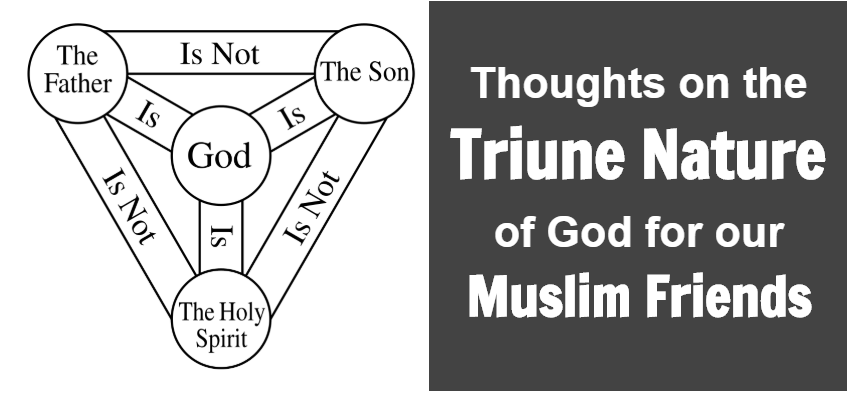
 It was a blustery January afternoon when I stepped through the door of my friend Ahmed’s shop. I was stopping by to say hello, to grab a cup of tea and to continue a relationship I’d been working to build for the last few months. We’d gotten to know one another sipping tea over Champion’s League soccer match reruns on the large television and amidst the steady traffic of people coming in to pick up groceries, to wire money or to ask Ahmed for help with filling out an application. The store was also home to a group that met regularly to discuss politics, education, sports and the teachings of the Quran. I had joined them on a number of occasions. The group had met the evening before and after Ahmed and I had exchanged all the regular greetings and small talk, he began to talk about a difficult topic which was on his mind. “Our group was meeting last night and my friend Mustafa was asking about why Christians believe in three Gods so I thought I’d see if you could come by next time and sort of explain about your three gods.” It wasn’t a surprise to hear this from Ahmed and so I said, “Three gods? Ahmed, Christians don’t believe in three gods.” Ahmed looked both relieved and confused and said, “Oh? But I’ve heard about the trinity. Trinity means three. You believe in God. That God had a son and that he is somehow God. And you believe that Mary is God.” He paused but before I could break in he continued, “Honestly, it’s rather disgusting to us Muslims. The idea that God could somehow have partners is really dishonoring to His glory and greatness. God is Great. God is unique. God alone is God - He has no partners. What Christians believe is “shirk”, Islam’s cardinal sin because it diminishes God’s greatness by saying that someone else is equal to God. Muslims cannot accept this. In the Holy Quran in Sura 5:73 it says, “They surely disbelieve who say: Lo! Allah is the third of three: when there is no Allah save the One Allah. If they desist not from so saying this, a painful doom will fall on those of them who disbelieve.” You are my good friend. Please reconsider your beliefs. I don’t want you to experience that doom.” How would you answer Ahmed? Growing up in a Christian community I was never challenged to explain the triune nature of God. Most of my friends - myself included - believed in the trinity but outside of a few analogies we could do little to really explain why it was important to the Christian faith. Your Muslim friends will not let you off the hook so easily. With today’s article I’d like to offer a few introductory thoughts about how to step into this particular conversation. These thoughts are not exhaustive and so I'll also share a number of helpful resources and talks by experts that will do a better job than I can do to actually explain the trinity to your Muslim friends. I want to encourage you to read and listen to all of these. For me it is a bit like watching a picture appear on a canvas as an artist adds layers of paint. With each article or video, a clearer picture will emerge and you will be better equipped to help your Muslim friends understand the central importance of the triune nature of God to the Christian faith. A Few Thoughts Rather than thinking you need to completely explain the Trinity to your Muslim friends, start with the more modest goal of helping them see that a triune God is logically possible. We may not be able to completely understand but that doesn't mean it is an unreasonable ideas. Shouldn’t the all powerful, infinite and glorious God of the universe be at least a little beyond human understanding? That doesn’t make his triune nature irrational or illogical. We also need to be careful with analogies. Saying that God is like an egg is problematic in all sorts of ways and we need to make it clear that we know that God cannot be explained by an analogy. All analogies will fall far short of ever explaining God and most are filled with real problems. Give a clear definition before you do anything else. Here is Nabeel Qureshi's definition: God is one in being and three in person. "Being" is what we are. I am a human being. "Person" is who we are. Ahmed or Tim or Juana or Anna. Make sure to read the scriptures with your Muslim friends whenever the opportunity arises. Why? First, they will meet Jesus in the scriptures because it is the living and active word of God. Second, they will have to wrestle with the validity of the Bible which can be proven and which we will explore in next week's post. If the Bible has not been changed (most Muslims contend it has), then it is clear that the Bible teaches that Jesus is God. Not only are there clear statements about the divinity made by Christ (Mark 14:62) and about Christ (John 1:1) in the Bible, there are also things that Jesus does which only God has the authority to do: forgiving sins, accepting worship, dictating scripture, etc. The first and last thing you should do as you discuss the triune nature of God with your Muslim friends is to pray and fast. Intellectual assent is rarely enough for a journey to faith. "No one comes to Jesus but that the Father who sent him draws them (John 6:44)." Salvation is always a work of the Holy Spirit. Remember, "The god of this age has blinded the minds of unbelievers, so that they cannot see the light of the gospel that displays the glory of Christ, who is the image of God (2 Corinthians 4:4)." We must pray that the blinders be removed! As a final word, "honor Christ the Lord in your hearts as holy, always being prepared to make a defense to anyone who asks you for a reason for the hope that is in you; yet do it with gentleness and respect (1 Peter 3:15). Walk in wisdom toward outsiders, making the best use of the time. Let your speech always be gracious, seasoned with salt, so that you may know how you ought to answer each person (Colossians 4:5-6). Each person. Our Muslim friends are people. They are not arguments to be defeated. They are people to be loved and the Father is drawing them to himself. The following articles, videos and books are resources I've found helpful as I prepare to give a reason for the hope I have in the Triune God. Helpful Articles
Helpful Books
Helpful Videos
0 Comments
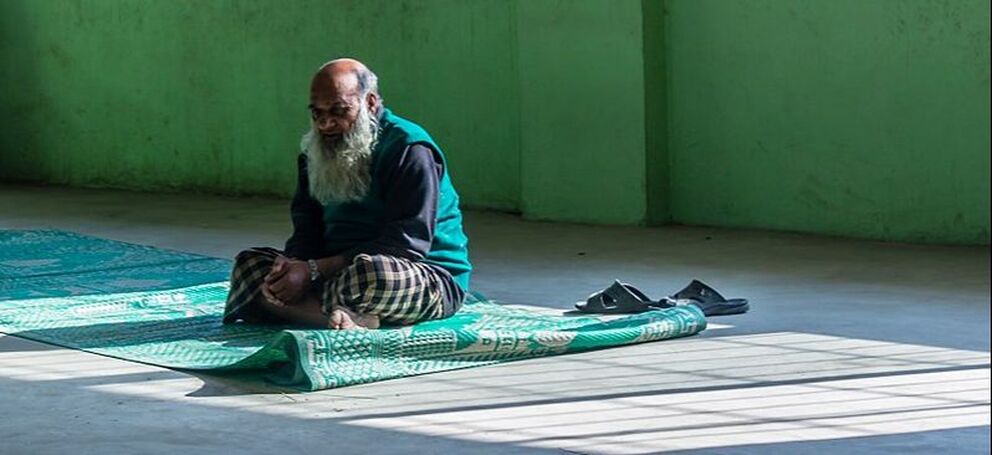 God loves Muslims. He really does. He came to earth as a baby, lived a perfect life and went to the cross because he loves Muslims and he desires both relationship with them and worship from them. It's what he desires for all of us. He loves them so much that he has begun to do an amazing work in the Muslim world. More Muslims have come to faith in Christ in the last fifteen years than in the previous 1,400 years combined! God is on the move in the Muslim world. And yet. Of the 1.8 billion Muslims in the world, the percentage who have come to faith is still extremely small. Even if the number were tens of millions, in order to reach 10% of the world’s Muslim population, there would need to be 180 million Muslims come to faith in Christ. There is still so much work to be done! And here is the challenge. The vast majority of Muslims in our world today live in places where there is little to no gospel witness. Turkey for example is a nation of over 80 million people and the number of Muslims who have come to faith in Christ is less than 10,000. Of the country’s 81 provinces, 18 of them have no established church. The vast majority of Muslims in Turkey will live and die without ever meeting a true follower of Jesus or having an opportunity to respond to the gospel. The story repeats itself across the Muslim world.
This list represents nearly half a billion people in just twelve of the largest Muslim people groups. These twelve people groups are just one quarter of the world’s 1.8 billion Muslims, most of whom live within the 10/40 window, the region of the earth between 10 and 40 degrees north of the equator in the eastern hemisphere. Are Muslims hard to reach? Are they resistant to the gospel? The reality is that we don’t know because the global church sends so few missionaries to the Muslim world - just one missionary for every 405,500 Muslims in 2015. The only thing we know for certain is that vast majority of Muslims across the globe have never had a chance to respond to the good news of Jesus Christ. As Scripture says, “Anyone who believes in him will never be put to shame.” For there is no difference between Jew and Gentile—the same Lord is Lord of all and richly blesses all who call on him, for, “Everyone who calls on the name of the Lord will be saved.” How, then, can they call on the one they have not believed in? And how can they believe in the one of whom they have not heard? And how can they hear without someone preaching to them? And how can anyone preach unless they are sent? As it is written: “How beautiful are the feet of those who bring good news." - Romans 10:11-15 What can you do this week to ensure that more Muslims have an opportunity to respond to the gospel and be connected to a true follower of Christ? Here are a few ideas: 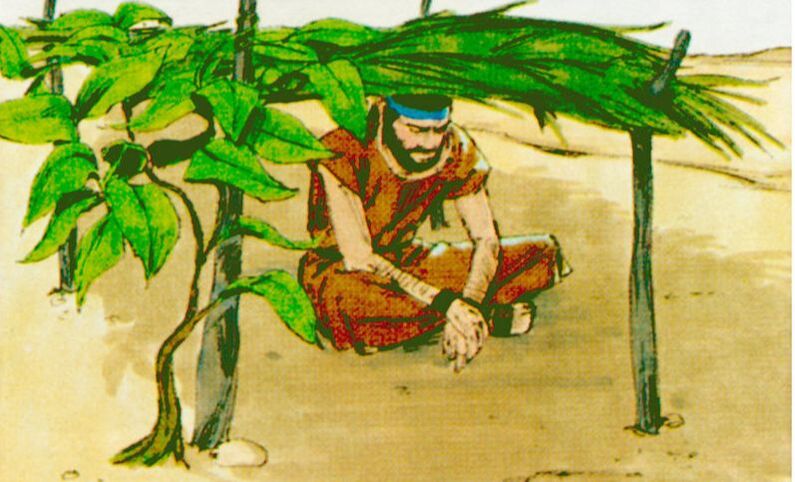 I've found the story of Jonah to be a helpful starting place for the North American church when it comes to exploring our attitudes and actions toward people from groups other than our own - Muslims, Buddhists, Hindus, Atheists or the LGBTQ community. Jonah is at best, the reluctant prophet. His reticence to go along with the mission of God to save the Ninevites becomes almost a distraction to the main message of Jonah's book: the heart of God to save. But God does save the Ninevites who repent and believe and turn from their wicked ways. Meanwhile, Jonah heads out to a hill beside the city in hopes that fire will still fall. It's there that the curious event with a shade plant growing and then dying occurs. Jonah had gone out and sat down at a place east of the city. There he made himself a shelter, sat in its shade and waited to see what would happen to the city. Then the Lord God provided a leafy plant and made it grow up over Jonah to give shade for his head to ease his discomfort, and Jonah was very happy about the plant. But at dawn the next day God provided a worm, which chewed the plant so that it withered. When the sun rose, God provided a scorching east wind, and the sun blazed on Jonah’s head so that he grew faint. He wanted to die, and said, “It would be better for me to die than to live.” Jonah was concerned about the plant and the comfort that it afforded him. The heart of God however was to save. The heart of Jonah was somewhere else, focused on something he thought he was loosing. Something he thought was important but that God didn't think was important. At least not as important as saving the Ninevites. This particular point in the story has had me thinking lately about the plants in my own life that I elevate above the mission and purposes of God -- the old wine skins that Jesus is inviting me to let go of in favor of new wine skins. Jonah is not a Bible character that we should emulate. His is not an example to follow. God seems to place the story of Jonah in the scriptures first and foremost to demonstrate His heart for the nations - even nations bent on evil. But there is an important opportunity in the story of Jonah to reflect on our own hearts. Discovery Take fifteen minutes to read or listen to the story of Jonah and then answer the following questions:
Feel free to interact with these questions and the E2E community in the comments below.  Ramadan is a month in the Islamic lunar calendar but it isn’t just any month. Ramadan is the month in which - according to Islamic theology - the first revelation of the Koran was revealed to the Prophet Mohammed and it is during this month that all Muslims across the globe are required to abstain from all earthly pleasures - food, water, cigarettes, sexual relations - from sun up to sun down. Fasting like this during Ramadan is one of the five pillars of Islam and it is one of the most important religious and cultural holidays for Muslims. This year Ramadan runs from May 6th through June 4th. Below is a short video explaining Ramadan. It is a few years old so the dates are wrong and it was created by a secular news source. Ramadan Opportunities Ramadan is a tremendous opportunity to learn, pray and build relationships with Muslims in your community. God is on the move in the Muslim world. More Muslims have come to faith in Christ in the last fifteen years than in the previous 1400 years combined. He is doing a new work and with today’s article I want to offer a number of ideas of how you can be a part of that work during the upcoming month of Ramadan. Ramadan Prayer Guide Since 1993, the 30 Days Muslim World Prayer Guide has been helping to both educate and lead Christians into a season of prayer for the Muslim world. This guide is a great resource to help you spend a few minutes each day praying for God to move powerfully. Each page has a few paragraphs about the day’s topic and three ideas to help you focus your prayer. Order one for your family or consider ordering more and enlisting others to pray as well. [Learn More] Prayercast also has a 30 day prayer email series which you can learn about at this link. Wish Your Muslim Friends a Happy Ramadan An easy way to wish your Muslim friends a happy Ramadan is to say “Happy Ramadan.” It's really that simple but you could also say “Ramadan Mubarak” which is a simple way to say happy Ramadan in Arabic and is a greeting used across the Muslim world. Read a Book or Two Ramadan could be a great month to choose a book about Islam or the Muslim world to read. An even better idea would be to gather a group of friends to read a book together. Here are a few suggestions:
Show a Prayercast at Your Church Many in our churches are struggling with how to respond to the world of Islam. There are many voices vying to shape the narrative around how we should think about Muslims. Prayercast is a great resource to help shape that narrative in ways more reflective of the heart of Jesus. You could show the Prayercast Islam video or Prayercast videos from any of the Muslim majority countries in our world at your church on a Sunday morning. Each video is just 3-4 minutes in length. [Learn More] Attend an Iftar Meal at a Local Mosque If you live in a city with a local Islamic Center you may be able to attend a community iftar meal. Many Mosques in North America use Ramadan as an opportunity to invite people in for this breaking of fast meal with the Muslim community. They usually set aside one evening of Ramadan for this. Check the website of your local Islamic center to see if they have a community iftar meal. [Mosque Visit Purpose and Etiquette] Make a Friend Online Across the Muslim world people are getting online in search of friendship and language partners. Embassy exists to connect Muslims and Christians so that bold and honest conversations about Christ can happen. They would like to help you get started today. You too can be a part of Greater Things. [Learn More] Host a Movie at Your Church There are a lot of great movies that have been made to help you and your church grow in your love and concern for the Muslim world. Consider having a movie night to watch one of these movies together with others from your church. Pray for a Muslim People Group Pick a particular Muslim people group and spend the month of Ramadan learning about them and praying for them. Here is a list of unreached Muslim people groups from Joshua Project - there are over 3,000 groups making up 23% of the world’ population. [See the List] Host a Ramadan Prayer Night Another great opportunity is to host a Ramadan prayer night. We’d love to help you make this happen if you’d like to do this. It could be as simple as gathering friends in your home to pray or you could organize a community wide prayer event at your church. Get More Training Maybe you are wanting to dive in deeper, to get more training so you can be better prepared. Crescent Project has an intensive training event every summer called Sahara Challenge. [Learn More] Whatever you do, do something. Do it in love and do it in prayer. And we'd love to hear about it so share your Ramadan plans and actions in the comments below.  It was noon and I was meeting my new friend Musa* for an hour over my lunch break. We’d decided to meet at our favorite coffee shops to connect. I’d first met Musa when he had reached out looking for someone to practice his English with. He’d had a lifetime of classroom instruction in his home of Cairo, Egypt* but had few native English speakers with whom he could practice. The first time we met we covered the bases of getting to know one another. Where are you from? What is your family like? What do you like to do in your free time? The sounds of Arabic were all around him in the busy Cairo coffee shop where he sat. I then asked Musa what he did for a living. He is a young guy, in his early twenties and had just gotten started working as a mobile phone app developer. Then he returned the favor and asked me what I do. I’m in full time ministry so this is always an interesting question to answer. But I dove in. "I help people in churches in America understand and follow Jesus. That is pretty broad but it involves teaching, training, coaching, encouraging and casting vision with leaders and regular people. I'm not going to get rich, but I do find tremendous fulfillment in doing the things that I believe that God has made me to do. I bet that sounds a little crazy, but that's what I do and really it's who I am." I could tell He didn’t completely understand what I was talking about so he asked a few more questions but then moved on, wondering if I’d been to Turkey. He’d recently visited Istanbul and loved the city. I told him of our four and a half years living there and how much we loved the people we knew there. We meandered in and out of topics and then he asked a serious question, “I hope to hear an emotional situation you have been through?” I thought for a few minutes and then told him about a recent struggle I’d been facing and about how our family had spent time praying for God’s wisdom and healing. It was good to be transparent with my new friend even though it felt a bit hard and I wasn’t sure he was following everything. Musa’s English is good but he hasn’t had a lot of experience talking about personal topics. When I was finished, I said, “What about you? Have you been through any hard situations in life?” Musa was contemplating his answer when he looked at his watch. He gave me a wry smile. “I’ll have to tell you next time. I’ve got to go now. But let’s make sure and meet again.” As Musa left, I wondered about our conversation. Had I said too much about what I do? Should have I asked more questions about his faith and beliefs? Should I have offered to pray for him before he left? What if I had said something wrong? I spent some time praying for our time together asking the Lord to use it for his glory and to reveal himself to Musa. And then I removed my headphones and shut down Facebook Messenger on my laptop computer. I got up from my seat in the corner of my coffee shop in South Dakota, grabbed my mug and headed up to the counter for a refill. Though we were half a world away, Musa and I had enjoyed a great cup of coffee and better conversation. We continue to connect regularly, oftentimes just texting back and forth, sometimes hopping on a video chat to say a quick hello and at other times, setting aside an hour to grab a cup of coffee for an extended talk. To my surprise, Musa had quickly moved into questions of faith. I’ve introduced him to Discovery Bible Study and we are slowly working through a creation to Christ story set. We read a passage of scripture - I paste it into Messenger and he reads the Arabic and I read the English. We then ask some simple questions to help us discover what the story says about God, about people and about how we should live our lives. It’s been slow because Musa often brings up his own questions - questions that are stretching me and forcing me to dig into my own faith and theology. We started with his questions about the Christian idea of a triune God. We’re now pressing into the validity of the Bible. And those conversations are packed in between talk of family and culture and food and movies and dreams for life. It’s a whole lot of fun. I am the only true follower of Jesus that Musa knows. I’ve been able to pray for him and continue to pray for him regularly. Musa is one of many young guys that I am connecting with online all across the Muslim world and someday, I hope I will be able to meet all of them in person, if not in this life, then in the eternity of heaven. That is my prayer for each of them. There are 1.7 billion Muslims in the world today and collectively, Christians are sending one missionary into the Muslim world for every 405,000 Muslims.[1] This has to change. John Stott has said, “We must be global Christians with a global vision because our God is a global God.” Because of advances in technology and the globalization of our world, millions of people throughout the Muslim, Hindu, Buddhist, Animistic and un-religious worlds are working to learn English. They are going online to try and find people with whom they can practice speaking. A new door of missionary activity has opened and it is open to everyone who is a follower of Jesus and has an Internet connection. Geography is no longer a barrier to your relationship with a Muslim like Musa. C.T. Studd said, “If Jesus Christ be God and died for me, then no sacrifice can be too great for me to make for Him.” Will you sacrifice an hour a week to invest in a relationship with a young man or woman in the Muslim world who is looking for friendship and someone to practice English with? Let Us Help You
*For security, names and places have been changed. 1 - http://www.thetravelingteam.org/stats 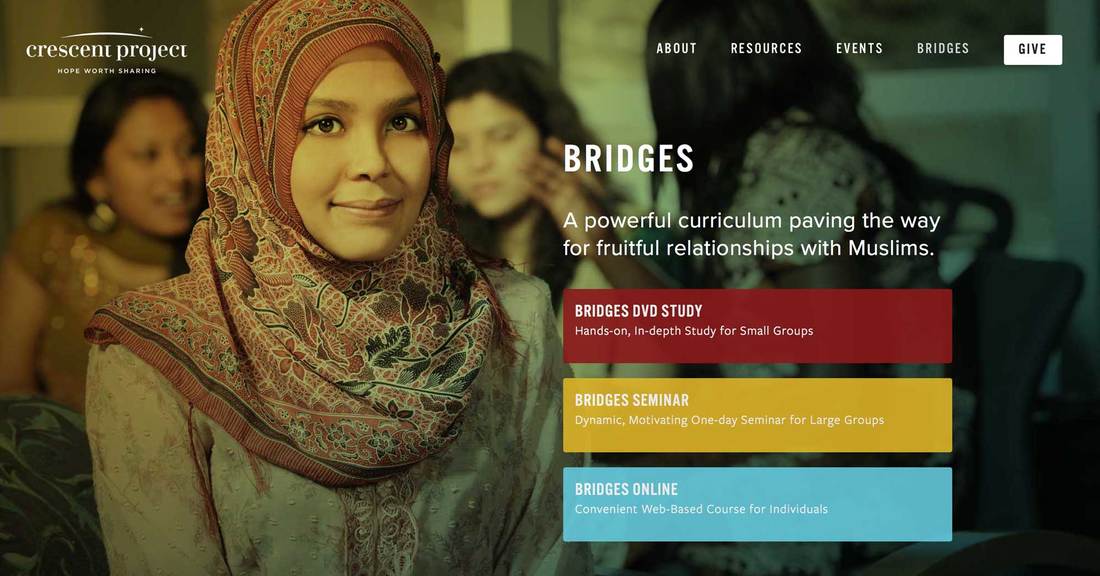 When my family and I returned from Turkey in 2012, one of the biggest challenges we faced was the level of fear and misunderstanding that we saw in well meaning Christians toward Muslims. We had spent nearly five years building relationships with Muslims who had become our dear friends and it broke our hearts to think that fear, misunderstanding and misinformation were paralyzing the church and preventing them from even saying hello to Muslims here in the U.S. let alone telling them good news about Jesus Christ. In all honesty, my first response was one of bitterness toward the church but God in his grace soon moved me to compassion and understanding. Our friends didn’t share our experience of loving relationships with wonderful Muslim neighbors and friends. It was at about that same time that a friend told me about the Bridges Study. The Bridges Study is a six lesson DVD study that can be used with small groups or Sunday school classes. As I’ve helped groups go through the study, I’ve seen it break down fear and remove misunderstanding as participants grow closer to Jesus as they step out in faith. Crescent Project founder, Fouad Masri, hosts the study which includes great teaching, inspiring testimonies and actionable next steps. I think every church should take their members through the Bridges Study. Here are five reasons why.
The Bridges Study will help you learn about Islam and Muslims through a Biblical/Missional Lens. Everyone is learning something about Islam and about Muslims. The source of that learning is generally the media or media personalities and the motivations behind those talking is often quite different. Some just want everyone to get along. Others want to warn us of hidden plots to take over America. The Bridges Study however presents great information in six thirty minute lessons through a Biblical lens that believes that God wants to see all Muslims repent and believe and follow Jesus. Participants often report that the Bridges Study lowered their fear, increased their understanding and gave them a heart to begin to pray regularly for Muslims to come to faith and look for opportunities to build relationships. The Bridges Study will strengthen the faith of those who go through it. Whenever we step outside of our comfort zones, we have an opportunity to be stretched and see our faith grow. One of the surprising benefits of working to mobilize the church to share the love of Jesus with Muslims was that as people began to explore learning about Islam and about how to share their faith with Muslims, their own faith began to grow. I’ve seen many who have taken the Bridges Study and met a Muslim suddenly reading their Bibles far more regularly because their new Muslim friends ask them questions they’ve never been asked before. Their prayer lives increase. As God begins to use them, their faith grows. The Bridges Study will help those who participate to be Christ’s ambassadors. 2 Corinthians 5:20 says that we are therefore Christ’s ambassadors, as though God were making his appeal through us. One of the cornerstone lessons of the Bridges Study is the four attitudes of an ambassador. It is a lesson that is crucial to understand if we are to share Jesus love with Muslims and as so many participants point out, with anyone. The Bridges Study will invite participants to step out in risk taking obedience to Jesus together with others. After each lesson, there is an action step to take. These are designed to get you out of the living room and into a relationship with a new friend. The goal is to give your new Muslim friend an opportunity to respond to the gospel and be connected with a true follower of Christ. It also gives you and your group an opportunity to step out in risk taking obedience to Jesus together. It gives you the chance to run after the things of God together! There is very little that is more exhilarating than step out in faith with a group of friends for the glory of God! Passive faith becomes active. Shallow fellowship become deep. And God will use your group to share the gospel with Muslims in your community. You’ll be running together! The Bridges Study will help you to be a part of seeing Muslims come to faith in Christ and worship Him. Many of the people I work with struggle to believe that God could use them to introduce a Muslim to a life transforming relationship with Jesus. But as participants begin to step out in faith, God begins to use them, to give them opportunities to share and to love well. Jesus tells us that the harvest is plentiful but the workers are few and then he commands us to pray to the Lord of the harvest to send out more workers into his harvest fields. The fields are his and he wants to use you to see Muslims come to faith in Christ. He has used people just like you all across the world. The Bridges Study was created first and foremost to help mobilize more harvesters into the harvest among Muslims. Start a Bridges Study today and join God in his miraculous movement in the Muslim world. CLICK HERE TO LEARN MORE ABOUT THE BRIDGES STUDY Click here to watch Session 4 to get of feel for the study After participating in an Everywhere to Everywhere (E2E) training weekend, many ask the question, "What next?" The Bridges Study can be a great next step as you return to your home church. Invite others to join you in exploring how God might want to use you - and your church - to reach the Muslim world. CLICK HERE TO LEARN MORE ABOUT E2E |
The E2E Community

Categories
All
Good Books



Archives
April 2024
|
Proudly powered by Weebly